


Overcoming Dog Training Frustration: A Calm Reset Plan

Last Updated: November 14, 2026
Quick Summary
Dog training frustration is the emotional buildup when your dog's behavior doesn't match your expectations, and it can stall progress. To overcome it, stop the session the moment tension rises, take three slow breaths, loosen your grip, and return only when calm, because your dog reads your state before you say a word.
Watch for lip licking, yawning, turning away, a stiff tail, or sudden sniffing as stress signals.
Keep focused sessions to five to ten minutes and end on a success.
Build impulse control with a sit before meals and waiting at doorways.
Treat a training plateau as information and break the step into smaller wins.
After a hard moment, give your dog space, a quiet place, and something calming to chew.
Tired of losing patience with your dog?
Peaceful Alpha teaches you to read your dog and stay calm on both ends of the leash.
Table of Contents
Managing Frustration While Training Your Dog
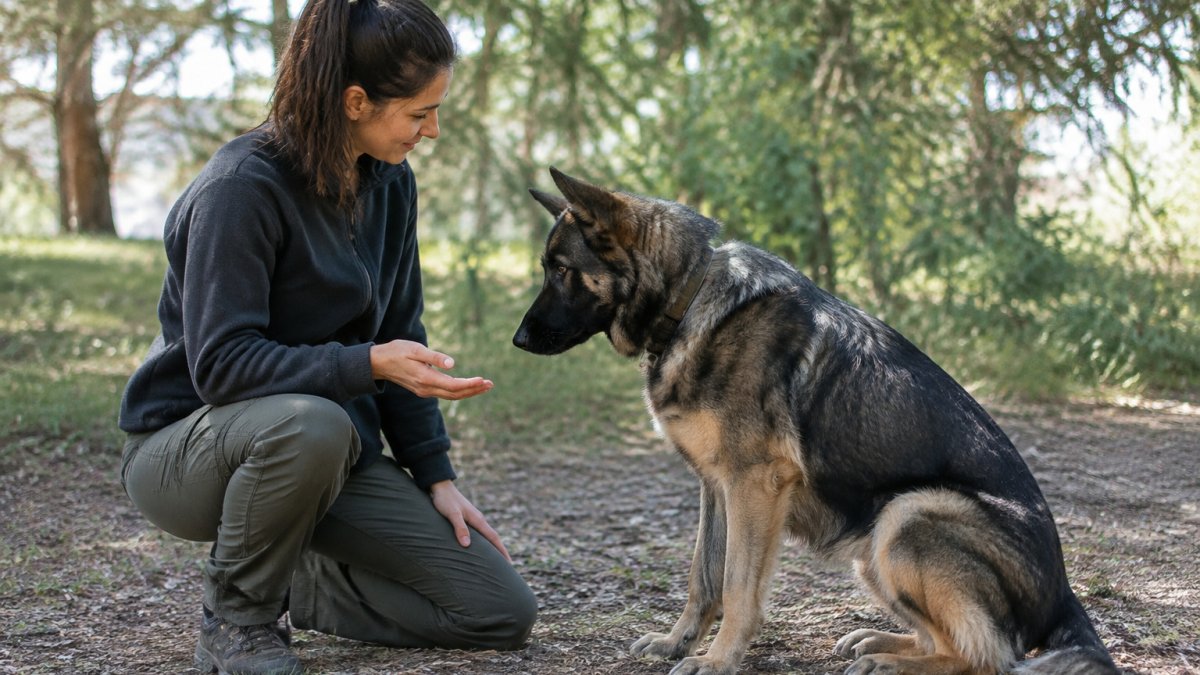
Dog training frustration is the emotional buildup when your dog's behavior doesn't match your expectations, and it can stall progress. Your dog reads your frustration before you say a word, managing your own state is the training. When you steady yourself, you can make room for patient, low-pressure steps with any dog, including an older rescue, as Front Range K9 Academy emphasizes.
Reading Dog Training Stress Signals Before Frustration Builds
Watch for lip licking, yawning, turning away, a stiff tail, or sudden sniffing. If you see two or more at once, stop and reset before your dog passes their threshold. For more, read Dog Signals That Work on People Too and our calming signal guide for humans.
Why Short Dog Training Sessions Beat Long Ones
Five to ten minutes of focused work beats a thirty-minute grind every time.

Set a timer for five minutes, end on a success, and log what worked. For realistic timelines, see our guide on how long it takes to train a dog.
Managing Frustration While Training Your Dog
When you feel the heat rising: stop the session, take three slow breaths, loosen your grip, and return only when calm. For hands-on help, book a session.
Building Impulse Control in Dogs
Impulse control is a dog's ability to pause before acting. Start small: ask for a sit before meals, wait at doorways, and reward calm settling with positive reinforcement.
Adjusting the Training Plan When Progress Stalls
A training plateau is information, not failure, a smaller step is often a better next move than more pressure.
Problem | Likely Cause | Fix |
Dog stops responding | Session too long | Cut to five minutes |
Lunging returns | Trigger stacking | Add distance, slow down |
No progress for weeks | Step too large | Break it into smaller wins |
Post-Frustration Recovery for the Dog
After a hard moment, stress hormones take time to settle. Give your dog space, a quiet place, and something calming to chew, and skip the next session.
Frequently Asked Questions
How can I stop getting frustrated when training my dog?
Start with your own state, not the dog's behavior. Before a session, take three slow breaths and loosen your grip on the leash; a calm handler gives clearer cues. Set one small goal per session and end on a win. If you notice your jaw tightening or your voice rising, stop and reset. Peaceful Alpha's guided meditations for owners are built around exactly this skill, and short sessions of a few minutes can help keep frustration from building.
How long should a dog training session last?
For most dogs, short dog training sessions of two to five minutes work better than 20-minute blocks. Puppies and reactive dogs often lose focus sooner, so watch for stress signals and stop before the dog checks out. Several brief sessions across the day beat one long one. Keep a simple log of duration and success rate so you can see whether a shorter session actually improves your dog's response.
How can I tell if my dog is stressed during training?
Watch for dog training stress signals: lip licking, yawning, turning away, tucked tail, whale eye, scratching, and sudden sniffing. These calming signals mean the dog needs a break or a simpler task. Trigger stacking, where small stressors add up, can push a dog past its behavioral threshold into barking or lunging. When you see two or three signals in a row, pause, decompress, and lower the difficulty before continuing.

Comments