


Calming Signals for Reactive Dogs: A Practical Guide

Last Updated: November 19, 2026
Quick Summary
Calming signals are the quiet, split-second body language cues dogs use to say they mean no harm or need space, such as head turns, lip licking, yawning, and freezing. For reactive dogs, catching these early cues lets you add distance before a reaction starts. A dog that signals and gets ignored learns to escalate.
A head turn paired with a hard stare, closed mouth, and forward weight is a warning, not a greeting.
Lip licking with no food around and sudden yawns are displacement behaviors showing mild stress.
Freezing is the signal most often missed and most often confused with calm.
Run the protocol in order: notice, create distance, loosen the leash, breathe, redirect, praise recovery, then pause.
Track the distance at which your dog can still take a treat and how long recovery takes.
Ready to read your dog's signals?
Peaceful Alpha teaches owners to read canine body language and calm reactivity with mindful training.
Table of Contents
Why Calming Signals Matter for Reactive Dogs
Here is the core idea. A reactive dog rarely explodes without warning. The warning is there, in a head turn, a lip lick, a stiffened stance. Owners often miss it because their attention goes to the other dog.
That gap is where trouble starts. A dog that signals and gets ignored learns to escalate. The good news: once you can spot the early cues, you can act before the meltdown.
Below, we break down the most common calming signals, show you how to read them in context, and give you a step-by-step plan for a reactive episode. First, though, a caution most guides skip.
Common Dog Calming Signals and What They Look Like
Dog calming signals are small, fast body movements that signal calm intent and ask for peace. They appear in everyday moments, not just stressful ones. A dog may offer them to you, to another dog, or to a scary object.

Learning to name each one is the first step. The list below covers the signals you will see most often on a walk, with what each looks like in the body and what it usually means in context.
Head Turns, Looking Away, and Turning Away
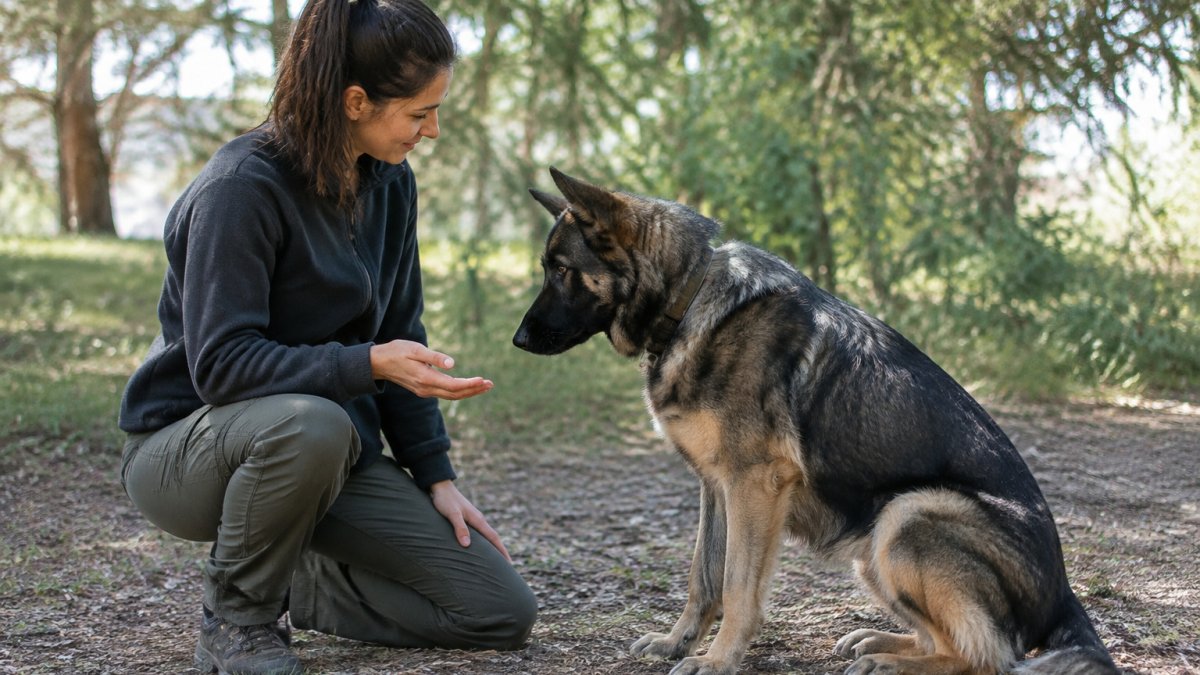
A head turn is one of the earliest and most common signals. The dog flicks its head to the side, breaking eye contact. A full turn of the body away from a trigger is a stronger version of the same message. Soft eyes and a relaxed face usually go with it.
What separates a polite head turn from a warning is the rest of the body. A relaxed head turn comes with a loose, wiggly posture and a soft mouth.
Lip Licking, Yawning, and Displacement Behaviors
Lip licking with no food around is a classic sign of mild stress. So is a sudden yawn during a walk. These are called displacement behaviors: actions that release tension when a dog feels unsure.
Displacement behaviors matter because they are among the first things to appear when a dog is conflicted, and they are easy to reward by accident.
Watch out: a yawn can also mean tiredness or a stretch after rest, so read it alongside the trigger and the dog's baseline rather than treating a single yawn as proof of stress.
Freezing, Stiffness, and Reduced Body Size
Freezing is the signal owners most often miss. The dog goes still, stiffens, and may lower its body or tuck its tail. Ears back and a closed mouth are common too. This is a dog holding its breath, bracing for something. When you see stiffness, add distance right away.
Freezing deserves special attention because it is the signal most often confused with calm. A still dog is not necessarily a relaxed dog. Look for the tells: weight shifted onto the front feet, a closed mouth, a hard eye, and a lack of the small, loose movements that mark a comfortable dog.
Other Signals Worth Knowing
A few more cues round out the picture. A shake-off, the full-body shimmy a dog does after a stressful moment, often marks recovery and is a good sign to reward. Sniffing the ground suddenly during a greeting is a classic displacement behavior. A slow, exaggerated arc around another dog is a polite approach; a straight-line approach is not. Tail height and wag speed matter too: a high, fast wag can signal arousal rather than joy, while a low, slow wag often signals uncertainty.
to dog calming signals breaks them down one by one.
Reading Reactive Dog Body Language in Context
Reactive dog body language only makes sense in context. The same lip lick means different things at the vet and in the living room. A head turn at a passing dog is a polite greeting.
Individual dogs also differ. Some are naturally vocal; others go quiet when worried. You learn your dog's baseline by watching it in calm moments, then noting what changes near a trigger.
A quick-reference tool helps here. If you want a guide that says "when your dog does this, you do that," our Dog Decoder Matrix maps dozens of common quirks and reactions to the right response.
Dog Stress Signals and Triggers: Spotting Escalation Early
Dog stress signals and triggers follow a pattern. Stress builds in stages, and each stage looks a little different. Catching the early stages keeps a small worry from becoming a big reaction.
Think of it as a ladder. At the bottom, your dog is relaxed. As stress climbs, you see more signals, faster and bigger. Near the top come the loud behaviors: barking, lunging, snapping.
Common triggers include other dogs, strangers, loud trucks, and tight spaces. Distance is your main tool. More space lowers stress; less space raises it.
Calming Signals Versus Stress Signals, Appeasement, and Shutdown
Not every signal means the same thing. It helps to sort them into three groups:
Calming signals: offered to keep the peace, often early and mild.
Stress signals: show rising discomfort, like panting, pacing, or a tucked tail.
Appeasement and shutdown: a dog trying to switch off conflict by going small, still, or overly submissive.
Shutdown is the one to watch. A dog that freezes and stops responding is not relaxed. It has switched off to cope. That dog needs space, not more pressure. Recognizing these differences is the heart of what we teach at Peaceful Alpha, and it is why our Dog Whispering 101 course focuses on reading canine body language before changing behavior.
A Step-by-Step Protocol for Responding During a Reactive Episode
When a reaction starts, you need a plan you can run without thinking. Most guides stop at "create distance." The protocol below adds the decision points that matter: when to move, when to stop, and how to tell whether your dog is actually recovering. It is built around a simple sequence: notice, create distance, lower arousal, then measure recovery.
Notice the first signal. Catch the head turn or lip lick before the barking starts. This is the hardest step and the one that pays off most. If you cannot spot the early cue yet, film a few walks and review them.
Create distance. Turn and move away from the trigger at a calm, steady pace. Distance is the single most reliable tool you have. Aim for the distance at which your dog can still take a treat and respond to a simple cue; that is your working distance for the day.
Loosen the leash. A tight leash adds tension and tells your dog you are worried too. A slack leash is not a reward for lunging; it is a signal that you are not adding pressure to an already stressed dog.
Breathe and slow down. Your calm breathing helps your dog settle. Slow your own pace and drop your shoulders before you try to redirect.
Redirect gently. Guide your dog's attention to you with a soft cue or a treat, but only once the dog is capable of eating. A dog that will not take food is still over threshold; keep adding distance instead of pushing the cue.
Praise the recovery. Mark the moment your dog relaxes and reward it. The recovery, not the reaction, is what you are training.
De-escalate, then pause. Give your dog time to reset before you continue the walk. A shake-off, a sigh, or a return to sniffing are good signs the reset is happening.
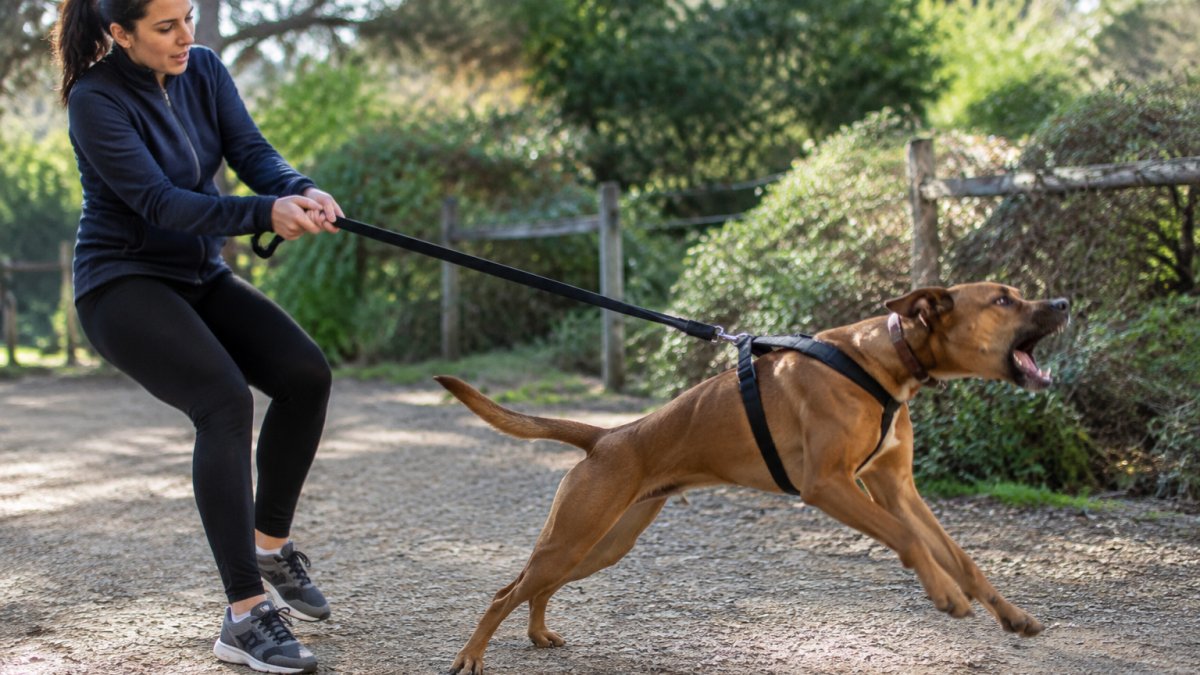
Watch out: if your dog is lunging, barking, or snapping, do not stop to train. Get distance first, then assess. Trying to run cues while a dog is over threshold teaches the wrong lesson and puts you at risk.
Measuring Recovery, Not Just Reactions
The protocol only works if you can tell whether it is working. Track three numbers on every walk: the distance at which your dog first notices a trigger, the distance at which it can still take a treat and respond to a cue, and the time it takes to return to a relaxed body after the trigger passes.
For the full leash-handling method, see our guide on how to stop your dog from lunging on leash.
Here is the sequence to run when a reaction starts, from the first signal to the reset.
Step | What to do |
1. Notice the first signal | Catch the head turn or lip lick before barking starts |
2. Create distance | Turn and move away at a calm, steady pace |
3. Loosen the leash | A tight leash adds tension and pressure |
4. Breathe and slow down | Slow your pace and drop your shoulders |
5. Redirect gently | Only once the dog is capable of eating |
6. Praise the recovery | Mark and reward the moment your dog relaxes |
7. De-escalate, then pause | Let your dog reset before continuing the walk |
How to Calm a Reactive Dog on Walks Using Signal Awareness
Calming a reactive dog on walks starts before the trigger appears. Pick quieter routes and times. Keep enough distance that your dog can still think and respond to you.
Watch for early warning signs and act on them. A head turn toward you is your cue to praise and keep moving. Calm outings, repeated often, build a dog that trusts you to handle the scary stuff.
Small habits add up:
Scan ahead for triggers so you can change course early.
Reward every check-in and every relaxed moment.
End walks on a calm note, not a stressful one.
The goal is not a perfect walk. It is a dog that looks to you when it feels unsure.
Tracking Progress, Recovery, and When to Seek Professional Help
Progress with a reactive dog is measured in small wins. Track how quickly your dog recovers after a trigger, not just whether it reacts. A shorter recovery, a faster return to soft eyes and calm breathing, is real progress.
Keep a simple log. Note the trigger, the distance, the signals you saw, and how long recovery took. Over weeks, patterns appear.
Seek professional help when reactions are frequent, intense, or getting worse, or when you feel unsafe. If you are ready for hands-on support, our review of the 10 best reactive dog training classes can help you choose.
Building a Calmer Walk With Peaceful Alpha
Reading calming signals is a skill, and like any skill it improves with practice and good guidance.
Peaceful Alpha, led by master dog trainer Jesse Sternberg, teaches owners to read canine communication and lead with calm. Private training and Board and Train programs in Toronto give you hands-on support. Online meditations and workbooks help you stay calm on your end of the leash.
You do not need to be an expert owner to start. You need a clear method and someone who can show you what to look for. Explore Peaceful Alpha to build calm on both ends of the leash.
Frequently Asked Questions
What are calming signals in dogs?
Calming signals are the subtle body language dogs use to defuse tension and signal good intentions, such as head turns, lip licking, yawning, and freezing. Reactive dogs often show them before a reaction, which makes them useful early warning signs. Learning dog calming signals helps you see stress building and act before your dog crosses its threshold, rather than after the barking or lunging has already started.
What should I do when my reactive dog shows calming signals?
Treat them as a cue to create distance and lower the pressure. Slow your pace, widen the gap from the trigger, and keep your own body calm and loose. Praise any relaxation you see, such as a soft eye or a shake-off. Don't push your dog closer to test it. If signals keep stacking, end the outing calmly and note what triggered the escalation so you can plan a wider distance next time.
Can calming signals stop a dog from reacting?
They won't stop a reaction on their own, but responding to them early can prevent one. Calming signals show your dog is uncomfortable before it hits its threshold. When you create distance at that point, you keep your dog under threshold and give it room to recover. Over time, pairing calm responses with consistent distance builds the relaxation and responsiveness that reduce reactive behavior on walks.
Are yawning and lip licking always signs of stress in dogs?
No. Dogs also yawn when tired and lick their lips after eating or when food is nearby. Context decides the meaning. A lip lick paired with a head turn, stiff posture, or ears back around a trigger points to discomfort, while a yawn during a relaxed nap does not. Watch for clusters of signals and changes in body tension rather than reading one behavior in isolation.

Comments