


7 Steps to Stop Your Dog From Lunging on Leash

Last Updated: November 9, 2026
Quick Summary
To stop dog lunging, work below your dog's threshold distance and follow a 7-step plan: map triggers, fit a front-clip harness or head halter, drill an emergency U-turn, play Look at That, reward offered engagement, help your dog recover after a lunge, and track progress weekly. Never correct a dog that is already over threshold.
Dog lunging at other dogs is a stress response, not disobedience.
Threshold distance is where your dog notices a trigger but can still think.
Practice the emergency U-turn when no trigger is present so it works later.
After a reaction, create distance and let arousal drop before moving on.
Shrinking distance is your real progress marker, so track it weekly.
Ready to end the lunging for good?
Peaceful Alpha teaches you to read your dog and lead with calm, on both ends of the leash.
Table of Contents
Why dog lunging at other dogs happens on walks
Dog lunging at other dogs is a stress response, not disobedience. When a dog feels trapped by a leash and unable to flee, the flight-or-fight response kicks in and lunging becomes the only option left.
Leash reactivity training changes that. Owners learn to read the early signs before the red zone hits:
Stiff body and locked stare
Raised hackles or tucked tail
Whining, panting, or lip licking
Sudden freezing mid-step
Barrier frustration makes it worse: a leashed dog cannot greet or retreat, so arousal climbs fast.
If your dog is reactive on walks, start by understanding the deeper healing work behind that reactivity.
Leash reactivity training starts with dog threshold distance training
Threshold distance is the point where your dog notices a trigger but can still think. Dog threshold distance training is the foundation of every good behavior modification plan.
Here is how to find it:
Pick a quiet spot with a distant trigger.
Watch your dog's body language for the first sign of alertness.
Mark that distance, then add a few meters of buffer.
Work at that distance until your dog stays relaxed.
Calming signals give you an earlier read. Yawning, turning away, and slow blinking all tell you the trigger is close.
How to stop leash pulling and lunging with a 7-step plan
Learning how to stop leash pulling and lunging means building a repeatable plan, not reacting in the moment. Use this sequence on every walk:
Step | Action | Frequency |
1 | Map triggers and safe distances | Once, then update |
2 | Fit a front-clip harness or head halter | Daily |
3 | Practice the emergency U-turn | Short daily reps |
4 | Play Look at That (LAT) | Every walk |
5 | Reward offered engagement | Every walk |
6 | Recover after a lunge | As needed |
7 | Track arousal and progress | Weekly |

Step 1: Map the environment. Note every trigger, the distance it appeared, and your dog's reaction to reveal patterns you would otherwise miss.
Step 2: Choose safety equipment. A front-clip harness or head halter can give more control on walks, and the right choice depends on your dog.
Step 3: Drill the emergency U-turn. Say a cue, turn, and reward. Practice when no trigger is present so it works when one appears.
Step 4: Play Look at That. Mark and reward your dog for glancing at a trigger, then looking back at you.
Step 5: Reward engagement. Any check-in earns a high-value treat, offered attention is the behavior to grow.
Step 6: Recover after a lunge. Post-lunge recovery matters too. After a reaction, create distance, let arousal drop, and run simple cues before moving on. Never correct a dog that is already over threshold.
Step 7: Track progress. Note distance and duration weekly. Shrinking distance is your real progress marker.
Watch out: handler anxiety travels down the leash. If you tense up when another dog appears, your dog reads it. Breathe, loosen your grip, and keep your own arousal low.
Breed can matter too. Match your plan to your dog's specific triggers.
For the full program behind these steps, learn how to master loose leash walking with your dog.
Book a private session with Peaceful Alpha
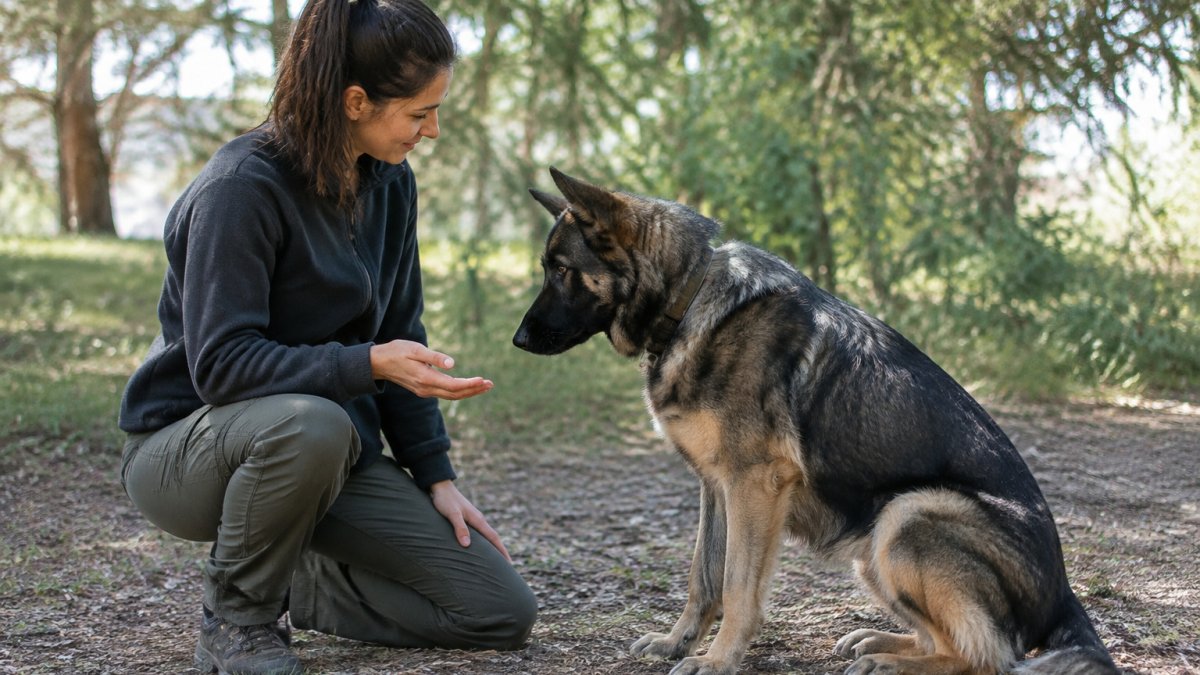
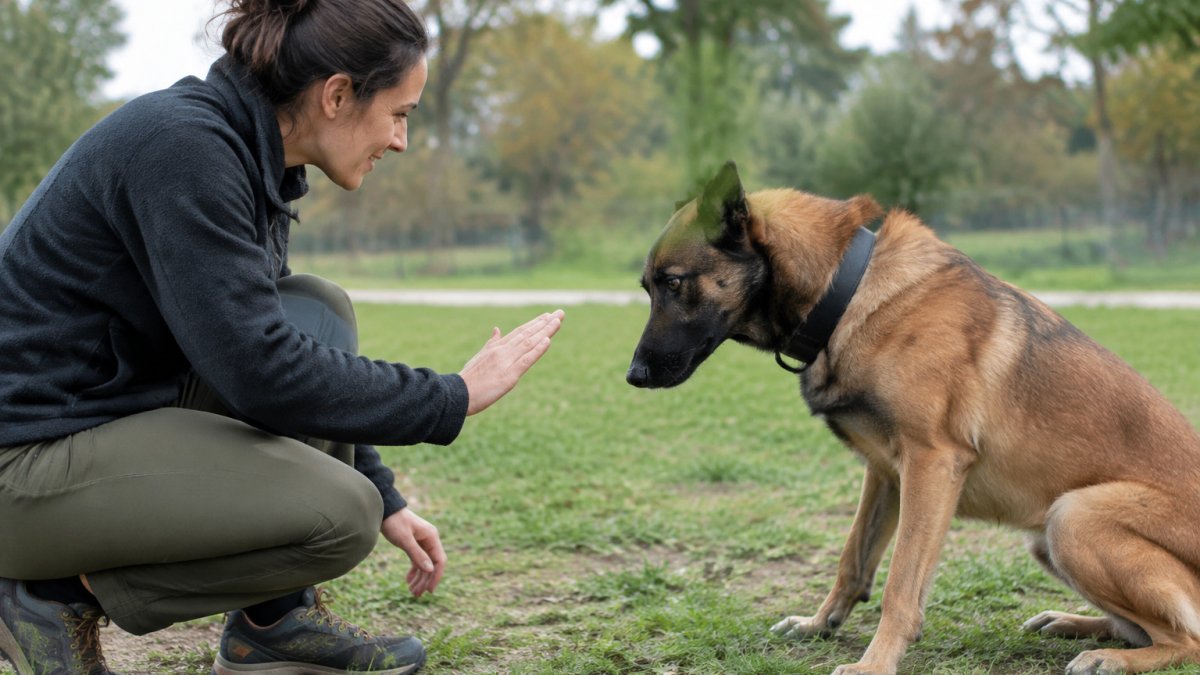
Some dogs benefit from more than a solo plan. Private coaching from Jesse Sternberg focuses on canine communication, calming signals, and body language.
You can book a free 15 minute video consultation first, or go straight to private coaching if you are ready to start.
If walks have become a source of dread, you do not have to solve this alone. Peaceful Alpha combines private training, board and train programs, and guided meditations for owners so calm starts on both ends of the leash. Our approach builds trust through calming signals, mindful handling, and positive reinforcement. Get started with Peaceful Alpha and turn every walk into a calmer, more connected experience.
Frequently Asked Questions
Why does my dog lunge at other dogs on walks?
Dog lunging is usually a flight-or-fight response triggered by feeling trapped on a leash. Barrier frustration, fear, over-arousal, and prey drive all play a role, and trigger stacking (several stressors piling up) can push a dog into the red zone faster. Watching your dog's body language, stiff posture, hard stare, closed mouth, is the first step to understanding what sets off the behavior.
Can leash reactivity training really stop dog lunging for good?
Results depend on consistent work. Leash reactivity training uses desensitization and counter-conditioning, pairing the sight of a trigger with high-value treats so the dog learns a new emotional response. Progress depends on the dog's history, arousal levels, and how reliably you keep them under threshold. Expect weeks to months, not days. A structured plan with distance and duration targets speeds things up.
What is dog threshold distance training and why does it matter?
Dog threshold distance training means finding the distance at which your dog notices a trigger without reacting, then working just inside that zone. At that distance you can redirect with high-value treats and reward engagement before arousal spikes. Over time you close the gap. If your dog stops taking treats or fixates, you are past threshold and need more space.
Should I correct or punish my dog for lunging?
Punishment often suppresses the outward behavior without changing the underlying emotion, which can make the next reaction more intense. Positive reinforcement, redirection, and an emergency U-turn teach the dog what to do instead. Calm-assertive handling from you, plus management tools like a front-clip harness or head halter, sets the dog up to succeed rather than shutting them down.

Comments