


10 Best Reactive Dog Training Classes Near Me Reviewed

Last Updated: November 12, 2026
Quick Summary
Reactive dog training is the structured process of changing how a dog responds to triggers such as other dogs, strangers, or traffic, using distance, reward, and gradual exposure rather than punishment. Compare providers on credentials, method, setting, screening, and outcomes before you book.
Score every provider on credentials, method, setting, screening, and outcomes before calling.
Treat shock, prong, or choke equipment as a red flag for fear-based behaviour.
Ask for the full program total in writing rather than a per-session rate.
Walk away from any group class where any dog can join without screening.
Private sessions suit dogs who cannot yet cope in a group setting.
Is your dog reactive on leash?
Peaceful Alpha offers private training, board and train, and online courses for reactive dogs.
Table of Contents
How to Compare the Best Reactive Dog Training Classes Near Me
Searching for the 10 best reactive dog training classes near me usually returns a long list of providers with almost nothing to separate them. This guide takes a different approach: it explains the criteria that matter, then shows you how to apply them so you can compare reactive dog training options on equal footing.
Reactive dog training is the structured process of changing how a dog responds to triggers such as other dogs, strangers, or traffic, using distance, reward, and gradual exposure rather than punishment.
Before you call anyone, score every provider on five points:
Credentials: certification, ongoing education, and insurance
Method: reward-based training and humane handling only
Setting: group class, private session, in-home, or board and train
Screening: an intake assessment before your dog joins any group
Outcomes: a written training plan and progress reviews
A provider that cannot answer all five clearly is a provider to skip. Veterinary behaviour guidance generally cautions against aversive tools for fear-based behaviour, so treat shock, prong, or choke equipment as a red flag.
Score every provider on these five points before you call anyone.
Criterion | What to check |
Credentials | Certification, ongoing education, and insurance |
Method | Reward-based training and humane handling only |
Setting | Group class, private session, in-home, or board and train |
Screening | An intake assessment before your dog joins any group |
Outcomes | A written training plan and progress reviews |
Reactive Dog Training Cost: What to Expect
Reactive dog training cost in Canada varies with format, session length, and how much one-on-one support your dog needs. Costs generally rise with the amount of one-on-one time and the length of the program. Ask for the full program total in writing before you commit to any provider.
Use this framework to compare quotes on equal footing:
Group class: ask whether the intake assessment is included or billed separately.
Private session: ask whether in-home visits carry a travel premium over facility-based sessions.
Board and train: ask for the full multi-week program cost and what written behaviour plan and progress reviews are included.
Assessment fee: ask whether any intake evaluation fee is credited toward training if you enroll.
Pricing depends on the provider, the number of sessions, and your dog's assessment, so ask each trainer for a written quote covering the full program rather than a per-session rate. A common pattern is a low headline price that excludes the intake assessment, follow-up sessions, or equipment, which is where the real total lands. For a deeper breakdown of what professional training typically involves, see how much professional dog training costs.
Watch out: a quote that lists only a per-session rate without the number of sessions or the follow-up schedule is not a comparable price, so ask for the total program cost before you book.
To make quotes comparable, build a simple table with one row per provider and columns for format, number of sessions, assessment included (yes/no), total program cost in CAD, and what happens if your dog is not a fit. That single table does more to separate providers than any method description.
Group Dog Training Classes for Reactive Dogs
Group dog training classes for reactive dogs can work when the room is small, the dogs are screened, and visual barriers keep triggers at a safe distance. Ask providers how they structure group sessions before you enrol. Consistent application of these management strategies often requires mastering specific handling techniques like those taught at Bark West to ensure your dog remains calm and focused during every session.
Ask three questions before enrolling:
How many dogs attend, and what is the trainer-to-dog ratio?
Are dogs assessed before joining, or can any dog walk in?
Is there a separate area for dogs who need more distance?
If the answer to the second question is "any dog can join," walk away. A group class without screening is how reactive dogs get worse.
Private Dog Training for Reactive Dogs
Private dog training for reactive dogs suits dogs who cannot yet cope in a group setting. One-on-one coaching lets the trainer read your dog's stress signals in real time and build a plan around your specific triggers, whether that is other dogs on the sidewalk or visitors at the door.
In-home sessions add context a training facility cannot replicate: your hallway, your front step, your usual walking route. Weighing private sessions against a residential program? Our comparison of in-home training versus board and train explains which suits which dog.
A consideration is that private sessions give your dog less practice around other dogs than group classes do.
Reactive Dog Training Exercises You Can Start Today
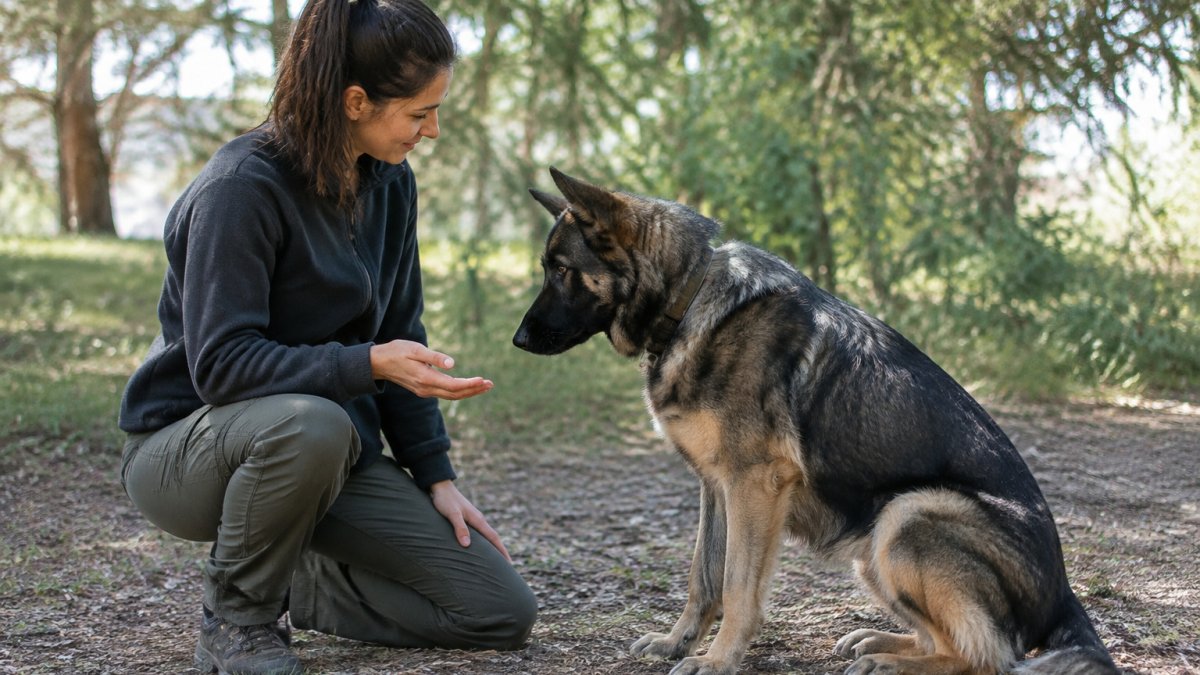
Reactive dog training exercises begin with distance and reward, not exposure. The goal is to keep your dog far enough from the trigger that they can still think, then pay them for calm behavior.
Start with these:
Find the threshold. Note the distance at which your dog notices a trigger but still takes treats.
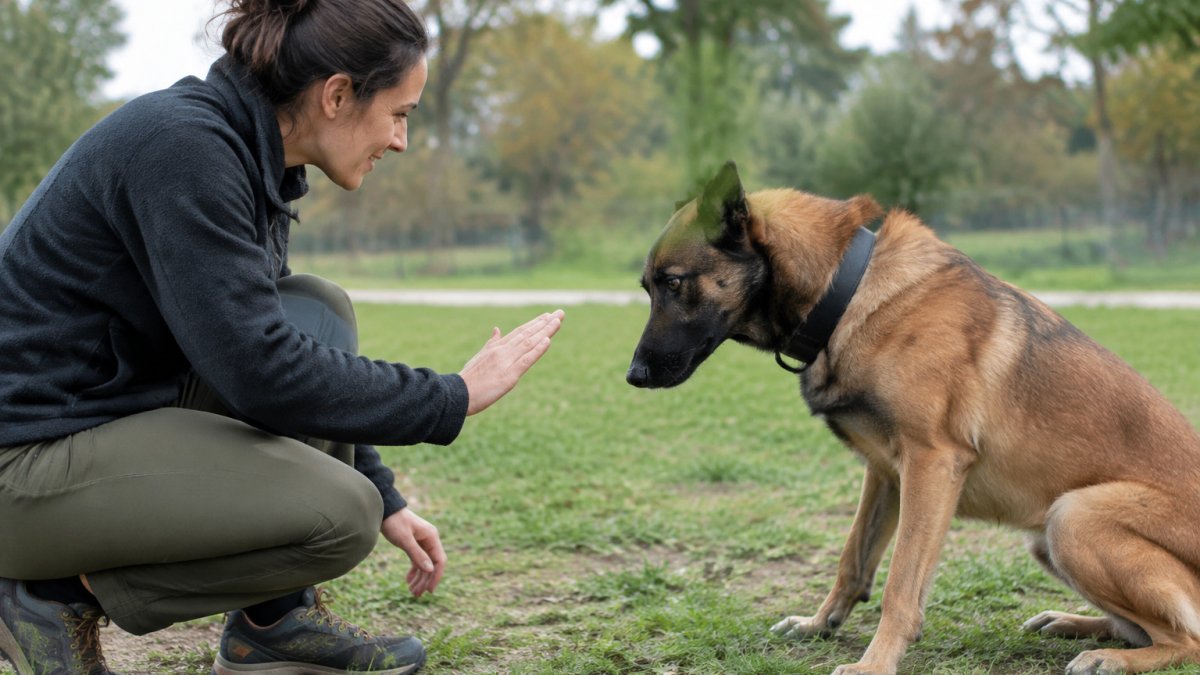
Practice the engage-disengage game. Mark and reward the moment your dog looks at a trigger, then turns back to you.
Reward check-ins on walks. Pay every voluntary glance in your direction.
Set up controlled distance. Practice near a park at off-peak hours, well outside the trigger zone.
Track calm behavior. Log good sessions so you can see progress on hard days.
A common mistake is closing distance too fast because the dog "seemed fine." For a behavior-by-behavior guide, our Dog Decoder Matrix maps specific reactions to the right response.
Choosing the Right Reactive Dog Training Program for Your Dog
Choosing the right program comes down to matching format to your dog's current threshold, not to the marketing. A dog who cannot pass another dog at 20 metres needs private coaching first; a dog who recovers quickly may thrive in a screened group class. The gap most guides leave open is eligibility and safety screening, so start there before you compare anything else.
Screen for suitability first. Ask every provider whether they assess dogs before group entry, whether they separate dogs by threshold, and what they do when a dog reacts in class. A dog with a bite history, severe fear, or aggression toward people may need a private assessment before any group setting. If a provider cannot describe their screening and separation policy in plain language, skip them.
Then compare on consistent criteria. Build a shortlist with one row per provider and these columns:
Format: group class, private session, in-home, or board and train
Eligibility: dogs accepted, screening required, bite-history policy
Duration: number of sessions and session length
Cost: total program cost in CAD, assessment included or not
Credentials: certification, ongoing education, insurance
Outcomes: written training plan and progress reviews
Set realistic expectations. Be wary of any provider promising a cure for reactivity. Ask how progress is measured, what practice is expected between sessions, and how you will track changes over weeks rather than days. A written plan with review points is the clearest sign of a professional program.
Verify before you commit. Confirm credentials directly with the certifying body, ask for recent client references, and read recent reviews for patterns rather than single comments. Our guide to what to look for when hiring a dog trainer gives you the full vetting checklist.

At Peaceful Alpha, master trainer Jesse Sternberg builds training around canine communication and calming signals, with private training packages in Toronto and board and train programs from his home. If you want to see how that approach fits your dog, review our dog training services.
Reactivity rarely resolves on its own, and the gap between a dog who copes and a dog who shuts down is usually the quality of the plan behind the training. Peaceful Alpha approaches that plan through calming signals, mindful handling, and owner coaching, with private training packages, board and train programs, and online resources that teach you to read your dog's feelings. Get started with Peaceful Alpha and build calm on both ends of the leash.
Frequently Asked Questions
What is the best type of training for a reactive dog?
Reward-based, positive reinforcement training is a common approach for reactive dogs. It focuses on changing the dog's emotional response to triggers rather than suppressing the behavior. Look for programs that use desensitization and counterconditioning, teach calming signals, and include owner coaching. Private sessions often work best for severe reactivity, while group classes suit dogs who can cope with controlled distance from triggers.
Are group classes suitable for reactive dogs?
Group classes can work well for reactive dogs if the trainer screens dogs first and keeps triggers at a safe distance. Look for small class sizes, barriers between dogs, and a curriculum built around controlled practice. Dogs with severe aggression or a history of biting usually need private training first. Ask any provider how they handle a dog that barks or lunges during class before you enroll.
How much does reactive dog training cost?
Reactive dog training cost depends on format, trainer credentials, and program length. Contact Peaceful Alpha directly for current prices, and ask what the total program cost includes, such as assessments, follow-up sessions, and written training plans.
Can reactive dogs improve with training?
Results vary by dog. A consistent training plan built on positive reinforcement, management strategies, and gradual exposure to triggers is the usual starting point, and progress is typically measured over weeks rather than days.

Comments